
If you’ve seen “JW” in a text message, it usually means “just wondering.” People commonly use it in casual chats on TikTok, Snapchat, Instagram, WhatsApp, and texting when asking something politely or casually.
You may have searched for this term after receiving a message like “JW, are you coming later?” or seeing it in social media comments. Since internet slang changes fast, many people want to know exactly what short text abbreviations mean and how to reply to them.
The good news is that JW is simple to understand once you know the context. In most conversations, it is friendly, casual, and not offensive.
In this guide, you’ll learn the real meaning of JW, where people use it, examples in chats, how to respond, and whether it is appropriate in different situations.
JW Meaning in Text
So, what does JW mean in text?
In texting, JW stands for “just wondering.” It is a casual abbreviation people use when asking a question without sounding too serious or demanding.
For example:
“JW if you finished the assignment?”
Here, the person simply means:
“Just wondering if you finished the assignment?”
JW is considered an internet abbreviation or texting acronym. It helps people type faster while keeping the tone casual and friendly.
Is JW Slang, an Acronym, or an Abbreviation?
JW is mainly a text abbreviation and an acronym because it uses the first letters of the phrase “just wondering.”
It also falls under internet slang since it became popular through online conversations and social media messaging.
Unlike some slang words that are confusing or trendy for only a short time, JW has stayed popular because it is simple and useful.
What Does JW Mean in Everyday Chat?
People use JW when they want to ask something casually without sounding pushy.
For example:
- “JW if you’re free tonight?”
- “JW, did you talk to Sarah?”
- “Hey, JW why everyone left early?”
It softens a question and makes it feel more relaxed.
Instead of sounding demanding, it sounds more like:
“No pressure, I’m just curious.”
That’s why many people use JW in everyday texting.
Where People Use JW
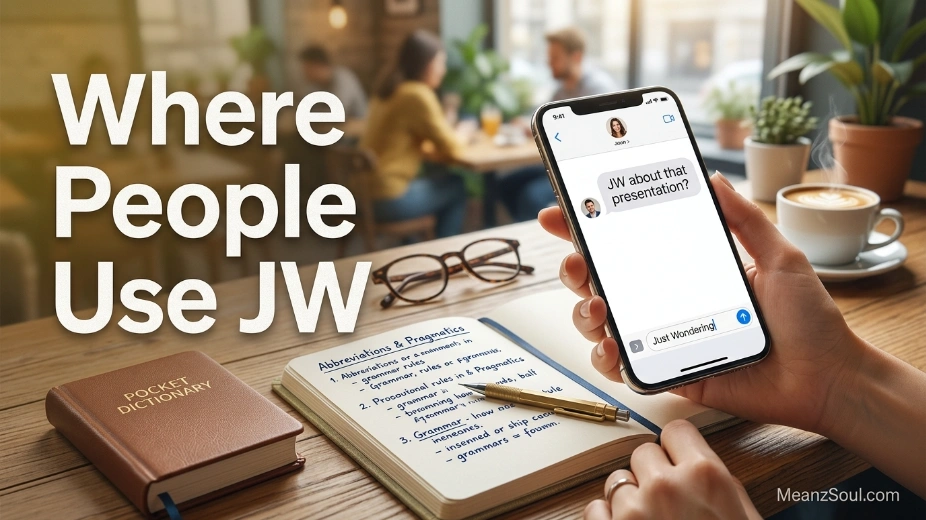
You’ll usually see JW in casual online conversations. Here’s how people commonly use it across different platforms.
TikTok
On TikTok, JW often appears in comments or direct messages.
Someone might comment:
“JW where did you buy this outfit?”
Or:
“JW, what song is this?”
People use it to ask questions in a friendly way without sounding rude.
Snapchat
Snapchat users often type short messages, so abbreviations like JW fit naturally.
Examples:
- “JW where u at?”
- “JW if ur still awake?”
Since Snapchat conversations are fast and casual, short slang terms are very common.
On Instagram, people use JW in DMs, comments, or story replies.
For example:
“JW, is this place worth visiting?”
Or:
“JW where you got those shoes?”
It helps keep the message relaxed and conversational.
In WhatsApp chats, JW is often used between friends or family.
Someone may text:
“JW if dinner is still happening?”
It sounds polite and less formal than asking directly.
SMS Text Messages
Traditional text messaging still includes abbreviations like JW because they save time.
For example:
“JW if you got home safe?”
Many people use it naturally without thinking twice.
Real Chat Examples
Here are some realistic examples of how JW appears in actual text conversations.
Example 1
A: Hey, JW if you’re coming to the party tonight?
B: Yeah, I’ll be there around 8.
A: Nice, see you then!
Example 2
A: JW, did you finish the project?
B: Almost done.
A: Cool, let me know if you need help.
Example 3
A: Hey, JW why everyone left early?
B: The meeting ended faster than expected.
A: Oh okay.
Example 4
A: JW if you’re busy later?
B: Not really, why?
A: Wanted to grab coffee.
Example 5
A: JW, have you watched the new movie?
B: Not yet.
A: You should—it’s really good.
Example 6
A: JW if mom called you?
B: Yeah, she did earlier.
A: Alright thanks.
Example 7
A: Hey, JW what happened yesterday?
B: Long story. I’ll explain later.
A: Okay haha.
Example 8
A: JW if the store is open?
B: I think until 9 PM.
A: Perfect.
Example 9
A: JW, are you okay?
B: Yeah, just tired.
A: Got worried for a second.
Example 10
A: JW if we still have class tomorrow?
B: Nope, it got canceled.
A: Nice!
How to Reply When Someone Says “JW”
How you reply depends on the conversation.
Here are some easy response ideas.
Funny Replies
If the conversation is playful, you can joke around.
- “Depends… why are you investigating? 😂”
- “That sounds suspicious lol.”
- “You asking for a friend?”
Casual Replies
Simple responses work best in everyday chats.
- “Yeah, what’s up?”
- “Nope, not yet.”
- “I think so.”
- “Maybe, why?”
Friendly Replies
Want to sound warm and helpful?
- “Yep! Happy to help.”
- “Sure, what are you wondering?”
- “Of course!”
Neutral Replies
Sometimes a straightforward answer is enough.
- “Yes.”
- “No.”
- “I’m not sure.”
- “Let me check.”
Usually, JW doesn’t require any special response. Just answer the question normally.
Is JW Rude or Offensive?
No, JW is generally not rude or offensive.
In most cases, it is a harmless and friendly abbreviation.
People often use it to make questions sound softer and less demanding.
For example:
“JW if you’re free later?”
Sounds gentler than:
“Are you free later?”
That said, tone still matters.
If someone asks something personal or annoying repeatedly, it may feel intrusive—but the term itself is not rude.
Is It Safe to Use?
Yes, JW is safe to use in casual conversations.
Friends, classmates, and family members commonly understand it.
However, not everyone knows texting slang, especially older people or professional contacts.
Is It Appropriate at School or Work?
At school, JW is usually fine when texting friends.
At work, it depends on the situation.
In professional emails or formal workplace chats, writing “just wondering” instead of “JW” is usually better.
For example:
Better for work:
“Just wondering if the meeting time changed.”
Less professional:
“JW if meeting changed.”
Using the full phrase sounds clearer and more professional.
Who Uses This Term?
JW is mostly used by people who text frequently and spend time online.
Age Groups
Younger people, especially teenagers and young adults, use JW more often.
However, adults also use it in texting because it saves time.
Gen Z Usage
Gen Z commonly uses abbreviations like JW because online communication moves quickly.
Instead of typing full sentences, many people shorten phrases.
That said, JW is not as trendy as newer slang terms. It’s more practical than fashionable.
Common Platforms
You’ll often see JW on:
- TikTok
- Snapchat
- iMessage
- SMS texting
Basically, any place where people send quick messages.
How Often Does It Appear Online?
JW appears fairly often but not as much as popular abbreviations like:
- LOL
- BRB
- IDK
- IMO
Still, many people use it daily in conversations.
Origin of the Term
The exact origin of JW meaning “just wondering” is somewhat unclear.
Like many texting abbreviations, it likely developed naturally as mobile texting became popular.
Back when texting had character limits and slower typing, people shortened phrases to save time.
Terms like:
- LOL (laugh out loud)
- BRB (be right back)
- IDK (I don’t know)
became common.
JW followed the same pattern.
Social media and internet culture helped spread it even more.
Apps like Snapchat and Instagram encouraged shorter, faster communication, making abbreviations feel normal.
Although nobody knows exactly who first started using JW, it likely grew from casual texting habits rather than one specific source.
Comparison Table
| Term | Meaning | Type | Usage | Popularity |
|---|---|---|---|---|
| JW | Just Wondering | Acronym | Casual texting | Medium |
| IDK | I Don’t Know | Acronym | Everyday chat | Very High |
| IDC | I Don’t Care | Acronym | Casual conversation | High |
| IMO | In My Opinion | Acronym | Sharing opinions | High |
| BRB | Be Right Back | Acronym | Temporary absence | Very High |
This comparison helps show where JW fits among common internet abbreviations.
It may not be as popular as IDK or BRB, but people still use it regularly.
Real-World Usage Example
Imagine your friend suddenly stops replying after school.
Later, you text:
“JW if everything is okay?”
You’re asking because you care, but you don’t want to sound too serious or demanding.
That’s exactly how JW works in real life.
It helps people ask questions casually and politely.
Instead of sounding forceful, it feels more relaxed and conversational.
Frequently Asked Questions
What does JW mean in text messages?
JW usually means “just wondering.” People use it when casually asking a question in texts or online chats.
What does JW mean on TikTok?
On TikTok, JW generally still means “just wondering.” Users often include it in comments or direct messages.
Is JW slang?
Yes, JW is considered internet slang and a texting abbreviation. It is commonly used in casual conversations online.
Is JW rude or offensive?
No, JW is not rude or offensive. It is generally friendly and safe to use in normal conversations.
How should you reply to JW?
Simply answer the question being asked. You can respond casually, formally, or jokingly depending on the situation.
Conclusion
So, what does JW mean in text?
In most cases, JW stands for “just wondering.” It’s a casual texting abbreviation people use when asking questions politely or out of curiosity.
You’ll commonly see it on TikTok, Snapchat, Instagram, WhatsApp, and regular text messages.
The term is generally friendly, safe, and not offensive. Still, it’s best to avoid using abbreviations like JW in formal school or workplace communication where full words sound more professional.
Once you know what it means, spotting JW in conversations becomes much easier.
Discover More Post
What Does ISTG Meaning Text ? Real Meaning Examples …
What Does PMO Meaning in Text ? Real Meaning Examples …
What Does GNG Mean in Text Real Meaning Examples …

Jove is a seasoned SEO expert with over 9 years of experience, dedicated to helping websites like MeanzSoul rank higher and drive organic traffic. Passionate about digital marketing, he specializes in SEO strategies, content optimization, and growth-focused solutions. At MeanzSoul, Jove combines technical expertise with a user-first approach to deliver measurable results and enhance online visibility.